
Homeopathy
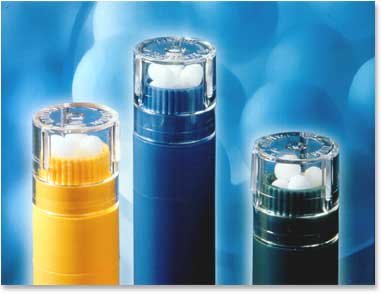
Homeopathy is the therapy of similars, "Similia Similibus Curentur." This statement by Hippocrates tells us that diseases can be cured by substances that, in infinitesimal doses, are capable of producing similar symptoms in healthy people through homeopathic experimentation, one of the pillars on which homeopathy is based.
Individualized patient treatment is another key characteristic, as each case is unique and the treatment is selected according to the patient's personal symptoms, which reflect their psychophysical makeup. Each homeopathic remedy possesses its own electromagnetic frequency, and when it resonates with the vibration of the illness, it effectively helps restore health. Medicine is based on generalizations, and everything has been demonstrated and tested through observation. A disease is a set of phenomena observed in numerous individuals, and when a drug is discovered, it must be effective in a statistically significant number of people. Homeopathic therapy, in addition to considering commonalities, takes into account individualization—that is, the patient's personal symptoms and their physical and emotional reactions—to select the appropriate remedy in each case. This involves diagnosing the homeopathic medicine most similar to the patient's symptoms.

What is the difference between a drug and a homeopathic medicine?
There are notable differences between homeopathic remedies and pharmaceutical drugs. A pharmaceutical drug acts by virtue of its chemical composition and the active ingredients it contains. Its molecule binds to specific cell receptors and has a specific effect on the body: bronchodilation, increased secretion, fever reduction, analgesia, etc. It therefore has an interventional action on the body's physiology. In contrast, a homeopathic medicine acts by its "presence" and triggers a reaction in the regulatory mechanisms to restore overall balance. Its action is also not dose-dependent, because even if the entire bottle were taken at once, the effect would not be greater nor would it produce toxic effects, as occurs with pharmaceutical drugs
What diseases can homeopathy and frequency or vibrational remedies treat?
Homeopathy can be effective as long as the person has adequate vital defenses—immune, humoral, neurological, etc.—and requires a reactive stimulus provided by the homeopathic remedy. It cannot replace urgent surgical intervention, such as for acute appendicitis, nor can it be used in cases requiring intensive, emergency, or trauma treatment. There are situations where pharmaceuticals are essential, and homeopathy can complement and enhance the treatment, as well as reduce adverse or toxic effects.
Does homeopathy work through the placebo effect?
The placebo effect is present in all treatments, just as it is in conventional medicine and pharmacology. Since the 1950s, countless rigorous experimental studies have been conducted on animals and plants regarding the efficacy of homeopathy and infinitesimal doses. The results were conclusive in the elimination of toxic substances previously administered to guinea pigs after they received homeopathic dilutions of the same toxins. On the other hand, the placebo effect is ineffective in serious illnesses.
Currently, the veterinary community has also specialized in homeopathy and has reported excellent results in animal treatments. Some veterinarians are also successfully using bioresonance devices. Similarly, homeopathy is used to treat plant diseases or improve their growth. This refutes the belief that homeopathic remedies only work through the placebo effect

Homeopathy was discovered by Samuel Hahnemann (Messner 1755 – Paris 1843). He conducted the first experiments on healthy individuals and observed that the remedies were effective when administered according to the principle of similars, but they caused some toxic effects. He decided to administer them in small doses and saw that they maintained their effectiveness while losing their toxicity. This is how he created the technique of dilutions and potentizations of the substances used to create homeopathic remedies.
The infinitesimal dose
Homeopathic remedies are obtained from substances of plant and mineral origin, and also some of animal origin. In the preparation process, once the tinctures are obtained, they are successively diluted on different scales—decimal, centesimal, Korsakovian, or fifty-thousandthsimal—and at the same time subjected to several succussions, a process known as potentization.
Low dilutions still contain very small amounts of the original substance, but from the 12th centesimal dilution onward, no molecules are found. Clinical trials, in vitro experiments, and studies in animals and plants have demonstrated that homeopathic remedies also have a real effect at high dilutions, and in some cases, improvement is preceded by a worsening of symptoms.
It is important to understand that homeopathy does not act chemically, like pharmaceutical drugs, which have a drug-receptor action on a specific tissue in the body. Each remedy vibrates at a specific frequency that corresponds to the original substance, and its effect is physical and wave-like, triggering a reactive response of the body's regulatory mechanisms.
Homeopathic experimentation
It constitutes another pillar of homeopathic therapy.
The Homeopathic Materia Medica contains the pathogenesis of all the remedies used in clinical practice. Each remedy has been tested on groups of healthy individuals alongside placebo groups and administered several times a day, inducing a series of symptoms that disappear upon discontinuation. These symptoms constitute the "pathogenesis" of each remedy included in the Homeopathic Materia Medica and can treat similar symptoms in sick individuals.

In 2011, the Swiss government published the most comprehensive report on homeopathy ever produced by an official body, concluding that it is effective, affordable, and safe. This research was undertaken because a majority of the population frequently used homeopathic treatments, prompting the government to commission a rigorous and lengthy study, including meta-analysis and epidemiological follow-up. Subsequently, the government held a referendum asking citizens whether they wanted homeopathy to be integrated into the Swiss healthcare system, and the result was an overwhelming "yes."
Scientific studies on the effectiveness of homeopathic treatment
Redalyc. Report of 58 veterinary cases treated with homeopathy
scientific-evidence-for-homeopathic-medicine.pdf
TREATMENT-OF-ATOPIC-DERMATITIS-WITH-HOMEOPATHY.pdf
Scientific Studies in Homeopathy* | Medical Journal of Homeopathy
Homeopathy, a social and healthcare reality – PMC
https://dialnet.unirioja.es/servlet/tesis?codigo=261689
http://assumptamestre.blogspot.com/2014/07/estudio-de-la-efectividad-de-la.html
https://pubmed.ncbi.nlm.nih.gov/33010094/
https://www.frontiersin.org/articles/10.3389/fonc.2021.597503/full
Homeopathy in Mexico | Ministry of Health | Government | gob.mx