Lithotherapy
Lithotherapy, from the Greek "lithos," meaning stone, and "therapeia," meaning therapy, is a complementary or integrative medicine technique that uses stones, gems, and crystals to promote physical, emotional, and spiritual well-being. It is based on vibrational resonance, but also on the color and chemical composition of each stone, especially in "scientific lithotherapy."
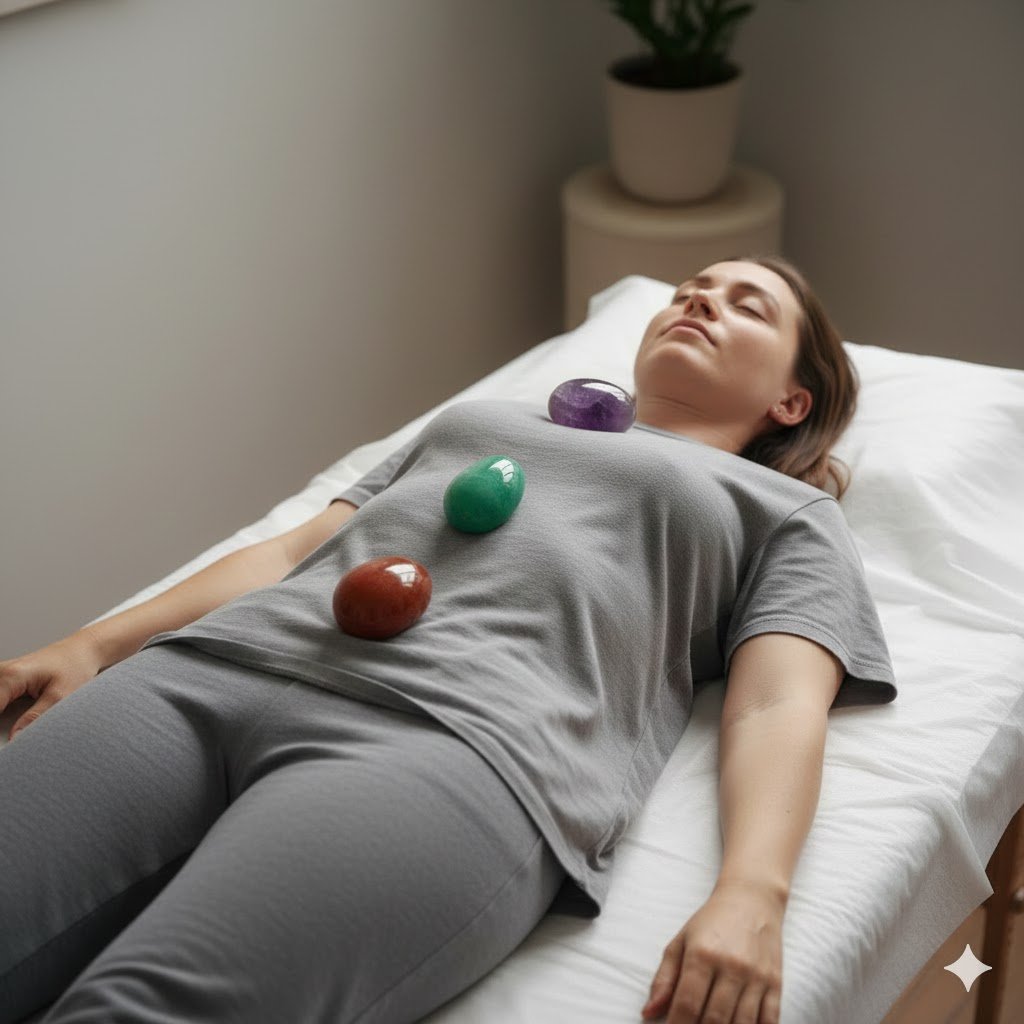
Common methods of use: One of the best known is "direct contact" with the patient. The vibration and resonance of the stone helps to refine or balance the patient's energy; it is therefore a bioenergetic therapy.
The chemical composition of the stone is the material basis of the method. For example, those with a high iron content are used to improve blood vitality, those rich in lithium for anxiety, and copper stones for inflammatory processes. They are usually placed on the energy centers or chakras. They are also used in the form of homeopathically diluted elixirs, which are taken orally.


In lithotherapy, there are two types of published literature. One, the most numerous, is "esoteric," attributing magical properties to stones without any foundation or logical explanation. There are also some books on scientific lithotherapy, published by physicians or well-informed authors. One of these is "Robert Blanchard," according to whom the efficacy of lithotherapy is based on quantum physics and bioenergetics. His main thesis is that minerals emit constant electromagnetic waves due to their perfect atomic structure. He attempts to move away from the mysticism surrounding stones, focusing instead on ions, Hertzian frequencies, and molecular resonance. His approach is much more rigorous and analytical than that of most authors.
Biomagnetism
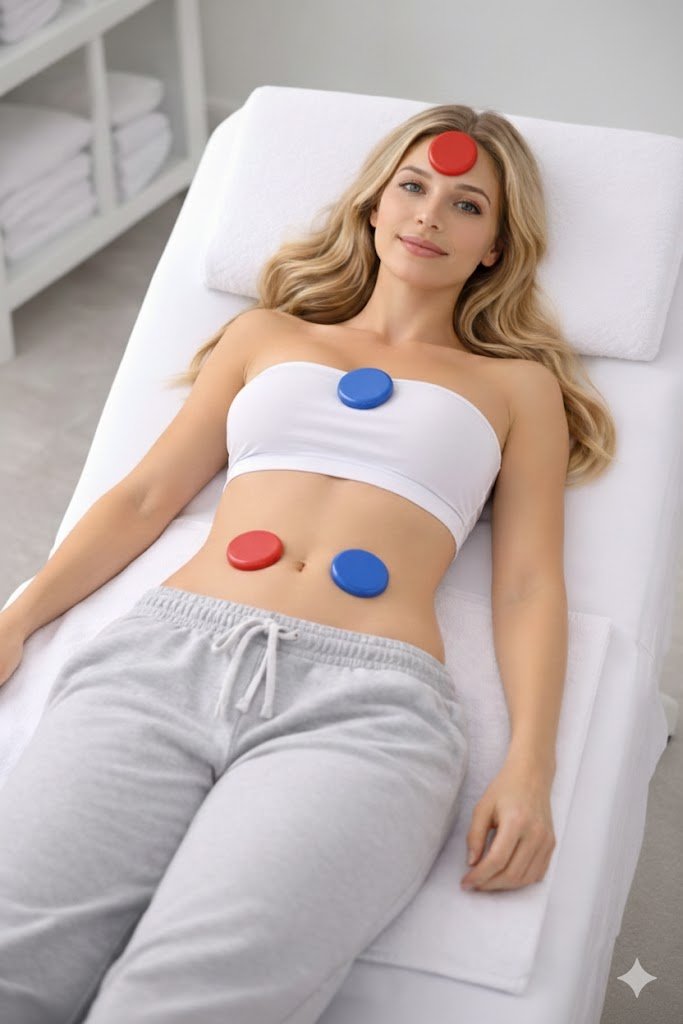
Biomagnetism (also known as Biomagnetic Pair Therapy) is a complementary therapy that uses medium-intensity magnets to balance the body's pH. Unlike conventional magnet therapy (which typically uses a single pole to reduce inflammation), biomagnetism uses pairs of magnets (one positive and one negative) placed on specific points to combat pathogens and restore health.
The main theory, developed by Mexican physician Dr. Isaac Goiz Durán in 1988, maintains that diseases are linked to alterations in the acidity or alkalinity (pH) levels of certain organs. The "pair" concept posits that pathogens (viruses, bacteria, fungi, and parasites) tend to thrive in areas where the pH is distorted.
Neutralization: By placing magnets of opposite charges on related points, the aim is to "neutralize" this pH. In a pH-neutral environment, pathogens are said to lose their ability to survive or reproduce, allowing the body to heal naturally.
What happens in a session?
Scanning: The therapist typically performs a "biomagnetic scan," which is a muscle response (usually observing the shortening or lengthening of the patient's legs) while mentioning different points on the body. Once the imbalanced points are detected, magnets (which are natural magnets, not electrically connected) are placed over the patient's clothing. The patient remains lying down for about 15 minutes with the magnets in place.
Common Benefits and Applications:
Although it is an integrative therapy and should not replace conventional medical treatment, users report benefits for infections, flu, sinusitis, digestive or urinary problems, chronic pain, migraines, fibromyalgia, and joint pain. In emotional disorders, it helps reduce stress and anxiety by balancing the nervous system.
Precautions and Contraindications:
This is a non-invasive and generally safe technique, but there are three contraindications:
1. Pacemaker: Magnetic fields can interfere with the functioning of implanted electronic devices.
2. Chemotherapy: It is not recommended during active treatment or in the months following, as it could interfere with the controlled toxicity sought by chemotherapy.
3. Pregnancy: As a precaution, magnets should not be applied near the fetus.